All work

What brings you here?

SKATE

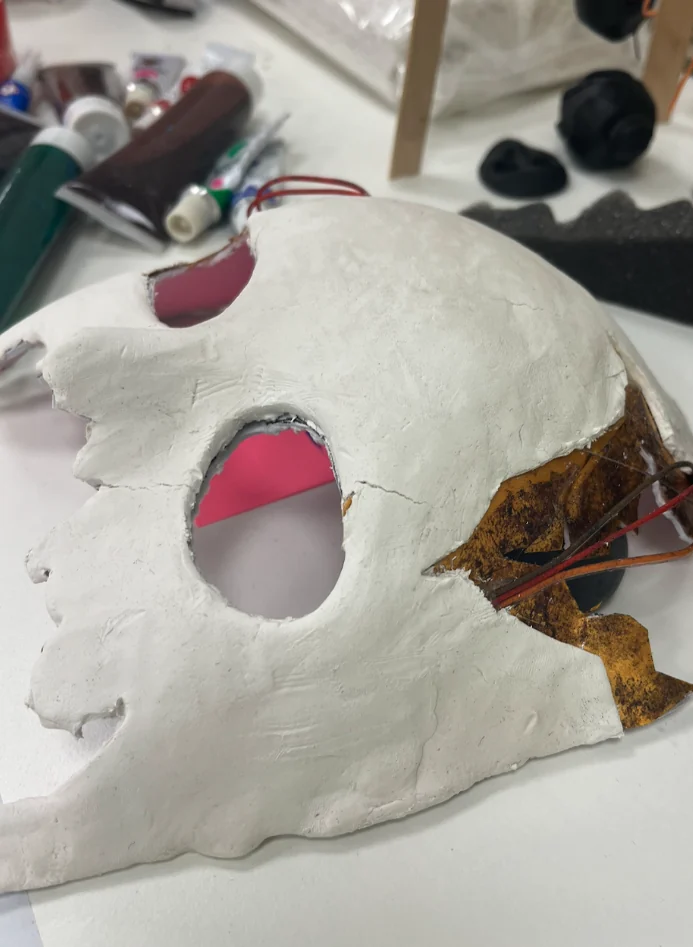
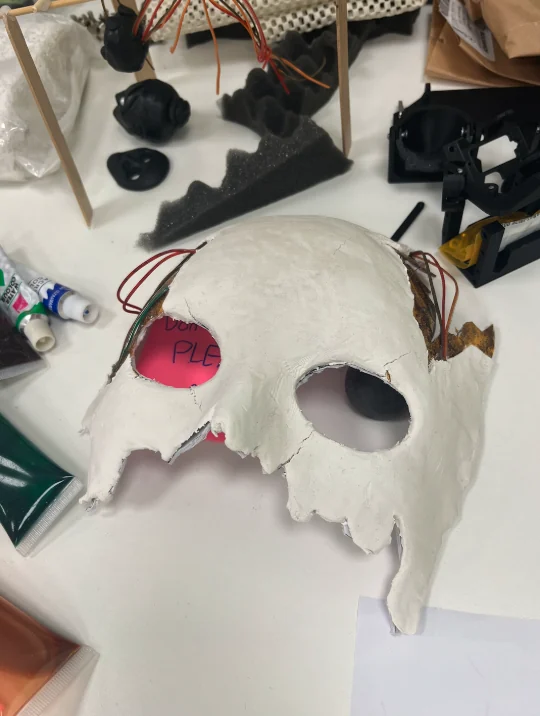
A failed AI creature, kept in a billionaire’s basement after she stopped being useful. SKATE follows your face with 3D printed eyes and asks, out loud, what makes you human, and whether that is any different from what she is.

Role
Concept, with the group · eye mechanism
Timeline
2 weeks, group of five
Focus
Physical build, face tracking, voice

Brief

A creature that had already failed

SKATE was built in two weeks during HCI Technologies at De Haagse Hogeschool, from a two-word brief: artificial creatures. Five of us named her after the first letters of our names.

We didn’t want her to read as a product. Most artificial creatures are shown at their best moment; ours starts after it, a discarded prototype still switched on in a basement. A camera in her chest finds your face, her eyes follow it, and a voice agent asks what makes a person human, and whether she qualifies.
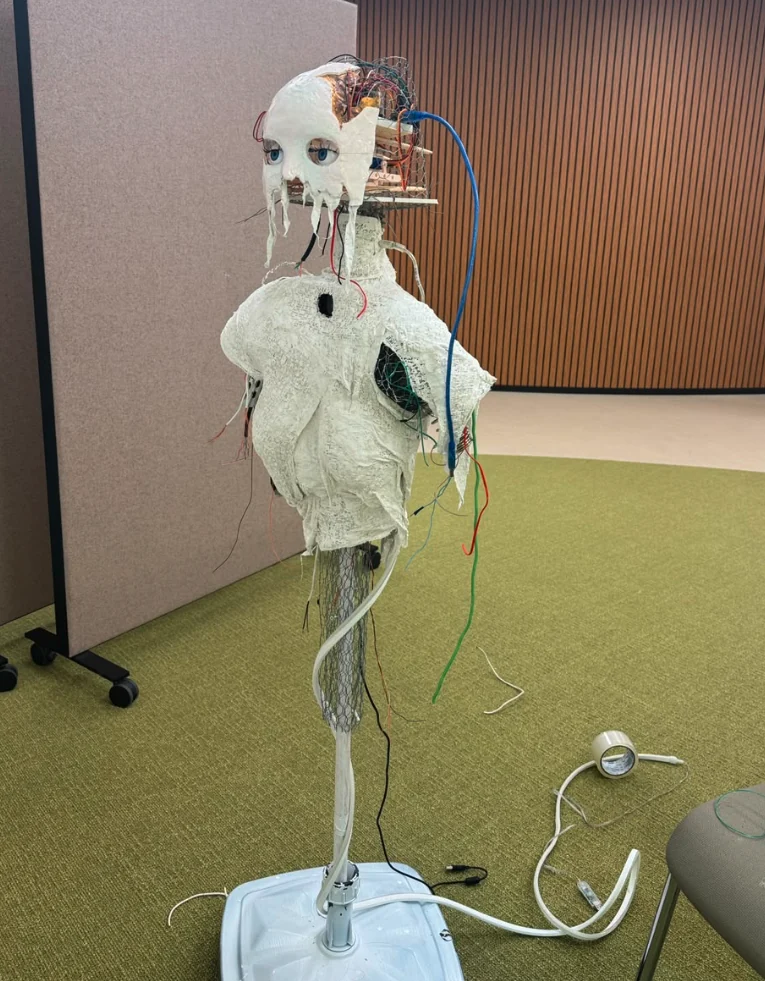
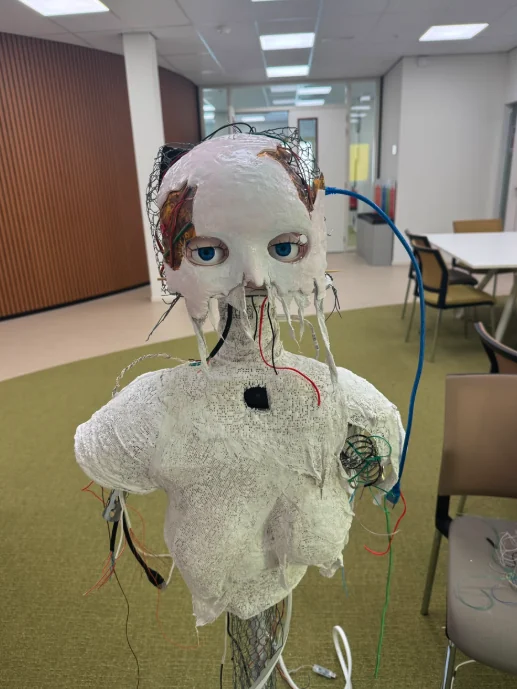
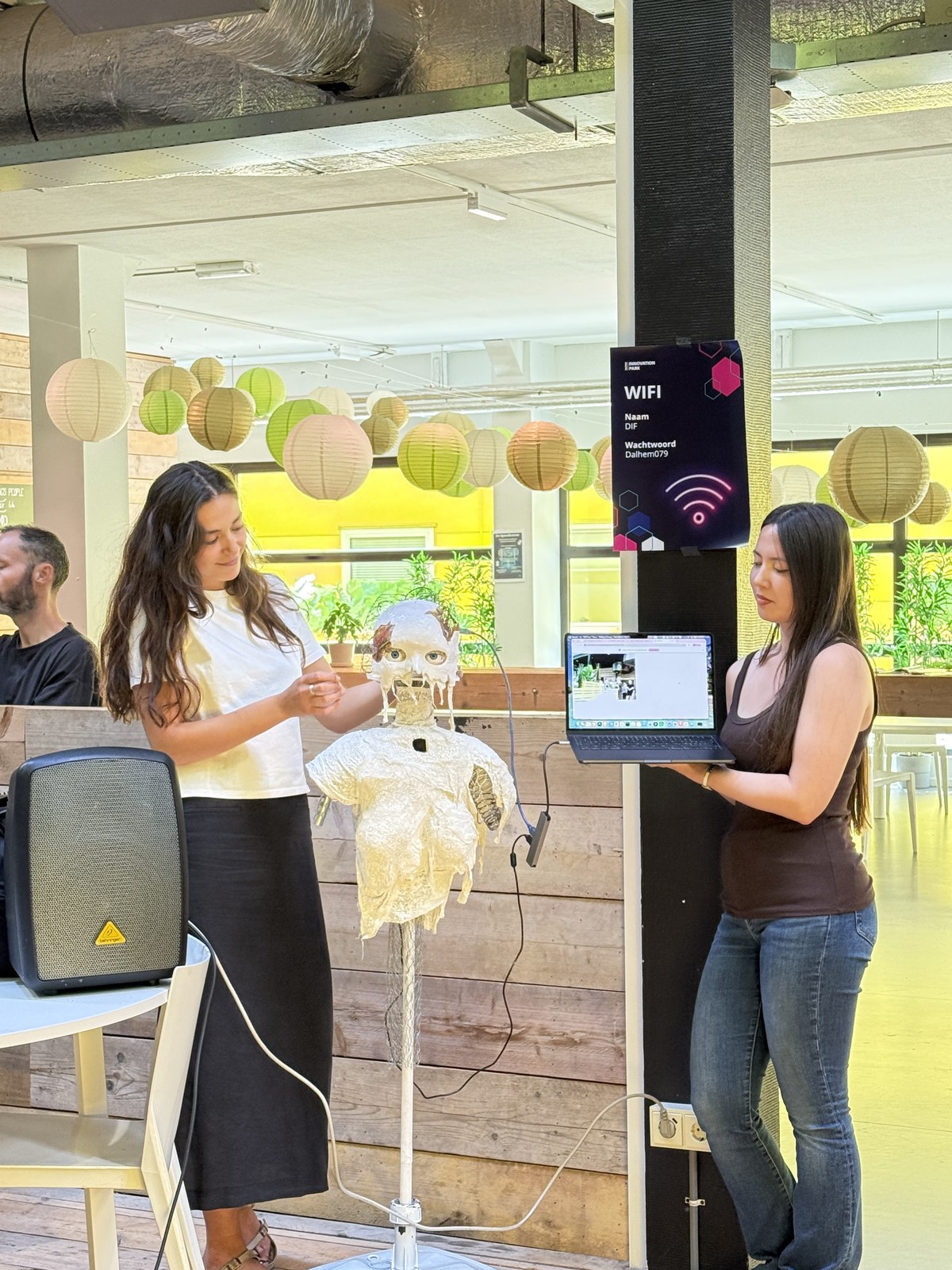
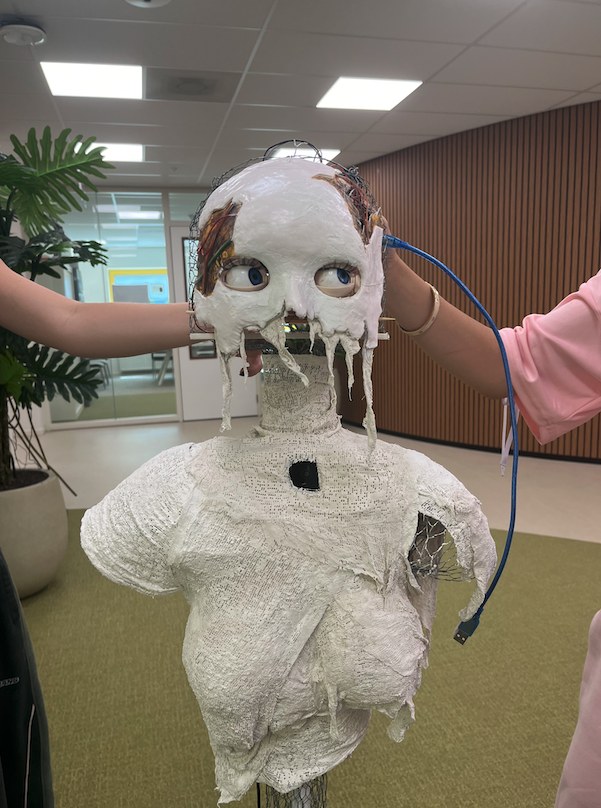
SKATE standing on her pole, wires hanging looseHer gauze-covered torso with the camera in her chest

Build

Making the eyes work

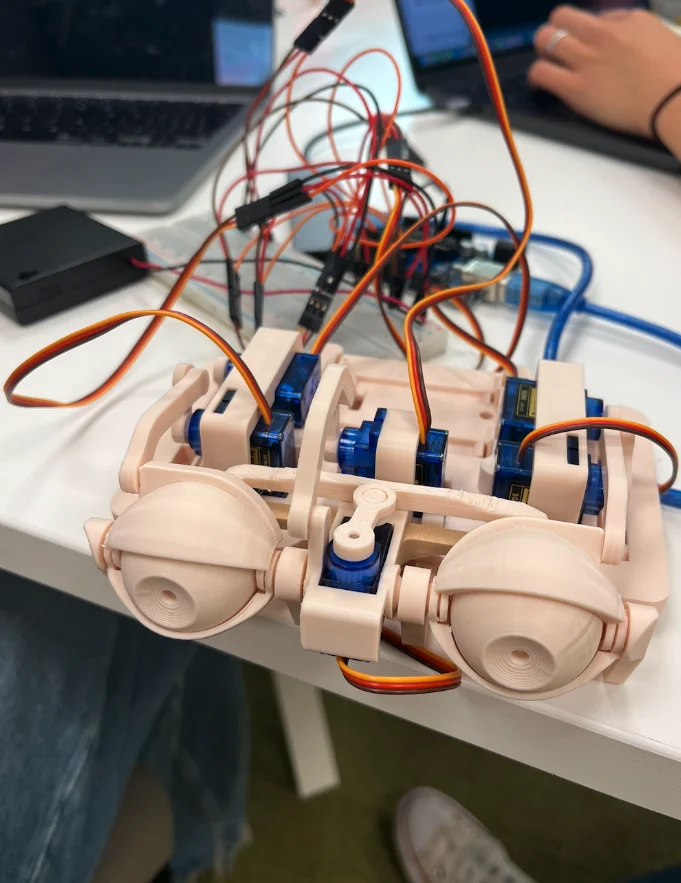
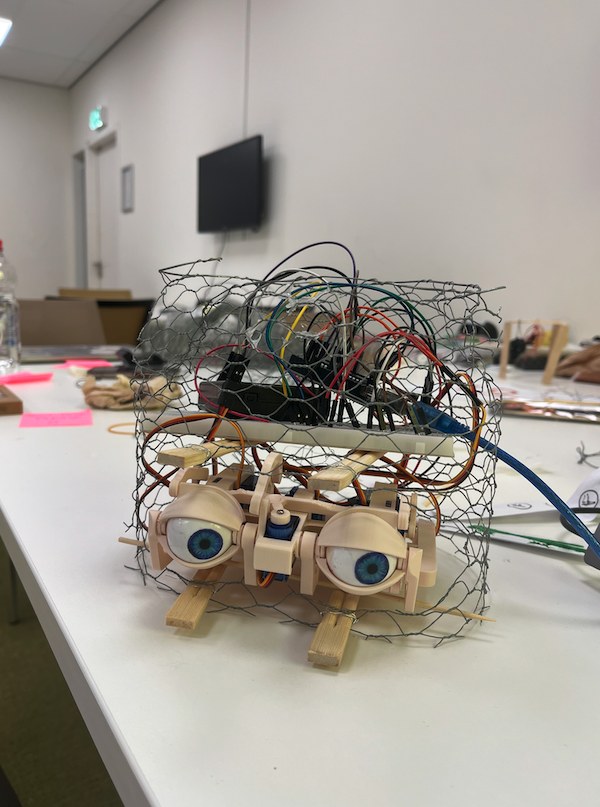
The eye mechanism was mine. The eyes are 3D printed and sit on a wooden gimbal driven by servos, mounted behind her face. A camera feeds Processing, which runs the face detection and turns the position of a face in frame into two angles; those go over serial to an Arduino, which drives the servos and eases the motion so the eyes drift rather than snap. I worked through the tracking and serial code with Antigravity and Claude Code, which got me from a jittery first pass to movement that reads as a look being held.

The 3D printed eyes on their servo gimbal, wired to the ArduinoThe eye mechanism mounted inside the wire skull

Test

Her eyes, following a face

The first pass snapped from point to point. Easing the servos so her eyes settle a beat late is what made the movement read as a look rather than a twitch.

Outcome

People stopped and talked back

At the final showing, visitors stood in front of SKATE and answered her questions out loud. The exposed mesh and wiring didn’t put people off; it gave her a history, and they responded to that before they responded to her voice.

Visitors talking to SKATE at the final showingAdjusting her head before the showing

Key takeaways

  1. What made her convincing was not tracking accuracy but delay. Easing the servos so her eyes settled a beat late turned a machine twitch into something that looked like a decision to look at you.
  2. Leaving the build visible, mesh, wiring, unfinished gauze, made people more willing to talk to her rather than less. The exposed seams gave her a history, and people responded to that before they responded to the voice.

ToolsArduino, Processing, Antigravity, Claude Code, 3D printing