All work

Parchment

A specialty coffee app for people brewing at home: log your brews, find out what you like, and learn where your coffee comes from. Self-initiated, with a specialty coffee enthusiast as client and my own hand-drawn illustrations.

Role
Researcher & designer, self-initiated
Status
Design complete, in testing
Timeline
Oct 2026 – Jan 2027
Focus
Research, mobile UX, design system

Research

Logging is the reason to come back

A survey, a home barista interview and two sessions with my client Haruto pointed the same way: 60% wanted a brew log, because settings drift with beans, weather and time, and paper notes get lost. 74% brew at home, so I started with espresso at home.
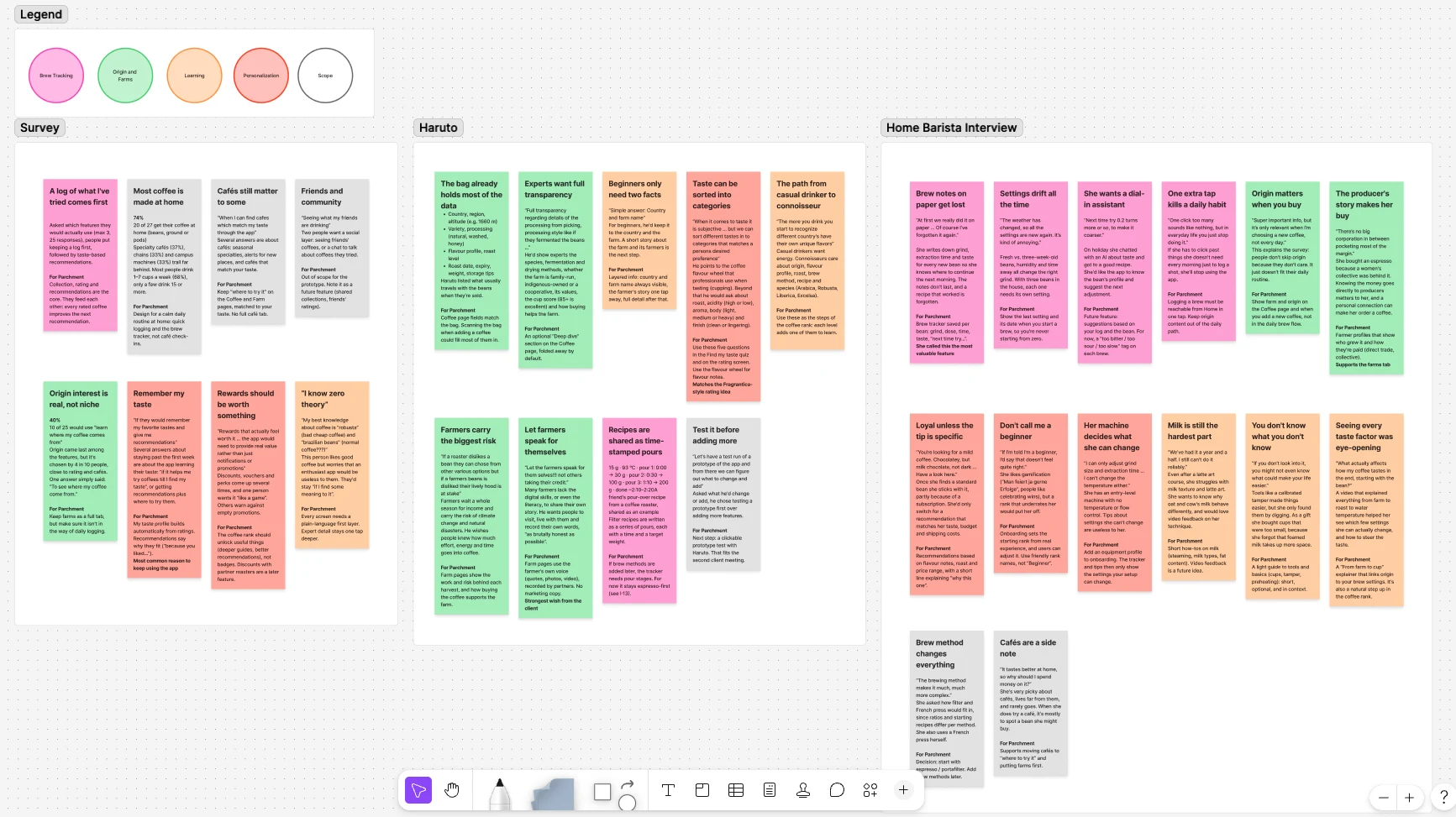
Research board: survey, client and home barista insights, colour-coded by theme

Define

Simple for beginners, deep for experts

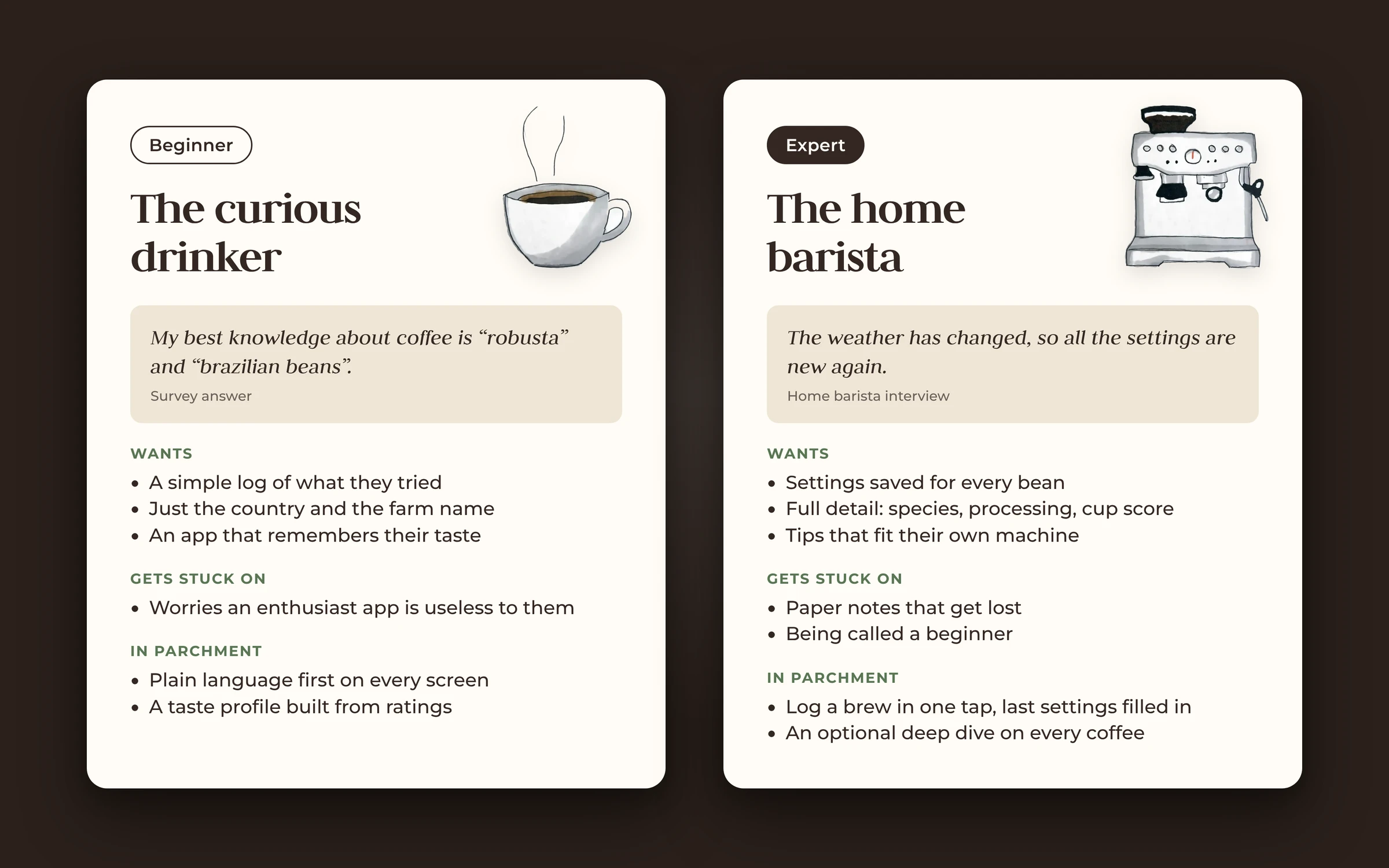
The research pointed to two very different people. Beginners need plain language and just a few facts; home baristas want every detail and settings that stick. So every screen starts simple, with depth one tap away.

Two persona cards: the curious drinker (beginner) and the home barista (expert), with what each wants, where they get stuck and what Parchment does for them

Design

A warm, hand-drawn look

Oat milk and espresso, three accents that each have one job, and my own watercolour illustrations instead of stock images.

Iterate

From V1 to V2

Testing V1 showed brewing was the daily habit, so the Farms tab became a Brew tab and farms now open from the coffee they grew. Prices went, the rank is counted in beans, and contrast was checked at 135% text size.

Outcome

Log, learn and taste, in one place

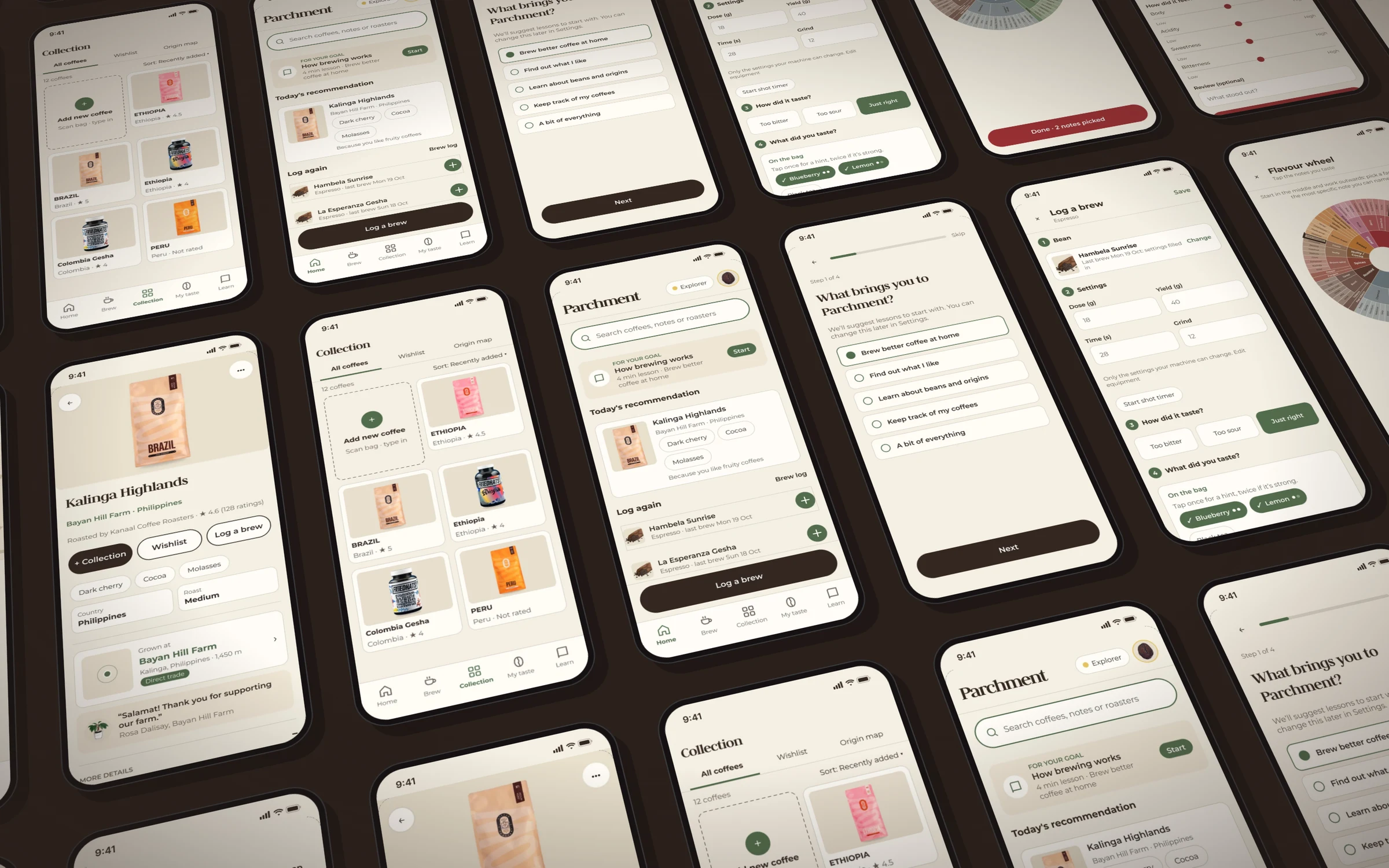
Logging a brew is one tap from Home and remembers your last settings. A flavour wheel helps you name what you taste, ratings build your taste profile, and a rank grows from Curious to Connoisseur. The designs are now being tested as a working app.

Parchment screens laid out flat: onboarding, home, collection, log a brew, flavour wheel, rating, coffee page and origin map

Key takeaways

  1. The daily habit decides the structure: logging is why people come back, so it sits one tap from Home with its own tab.
  2. Layering information (basics, then the story, then a deep dive) lets one app serve beginners and experts alike.
  3. Saying “later” mattered as much as “now”: other brew methods, social features and discounts wait until the core is tested.

ToolsFigma, FigJam, Claude, React Native & Expo