All work

Beehive

A six-month research project with a municipality, looking at why one public street felt unsafe for women, and what could change that. Working closely with an urban designer on the client’s side, our team of four ran street interviews, long interviews and surveys, gathering over 100 data cards to turn perceived safety into design direction.

Role
UX researcher & designer, team of 4
Status
Concept, informing future plans
Timeline
6 months
Focus
Perceived safety research, urban design

Define

Unsafe after dark

Picture walking home here at night: a long, straight path, harsh lights that leave the edges black, and no one else around. On paper the street was safe, but women said it never felt that way. The municipality asked us to design for that feeling.
Research

Straight from the street

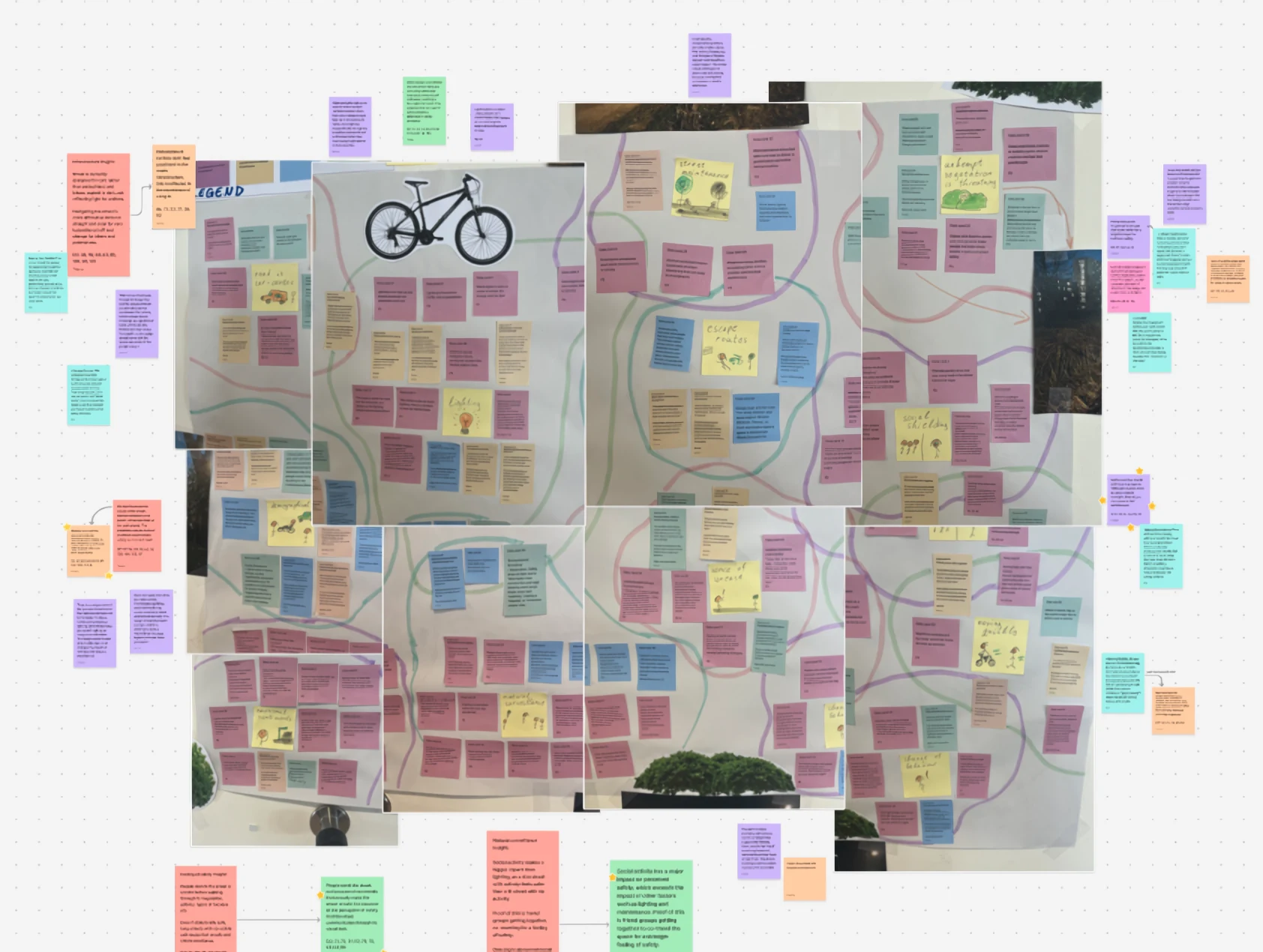
We went to the street itself: quick street interviews with people passing by, longer interviews with women who walk it, and surveys, together with an urban designer from the municipality. Every answer became a data card on one wall.

The research wall: data cards from street interviews, long interviews and surveys, clustered by theme

Insights

What makes a street feel unsafe

Ideas

Ranked, then chosen

Design

From sketch to 3D

Outcome

The Beehive

The design hasn’t been built yet, but parts of it are already informing the municipality’s future plans for the street.

Key takeaways

  1. Natural surveillance mattered more for perceived safety than lighting or maintenance; friend groups even co-travel the space for a stronger feeling of safety.
  2. Lighting alone doesn’t create safety, people do. Light should guide people toward a route rather than just brighten the space.
  3. Legibility reduces threat perception: people feel safer when they can read a space and understand what is around them.

ToolsMiro, Figma